

If you have any questions, you can reach your mentor at:
Phone +44 7758 484544 (09:00 to 17:00 UK time)
WhatsApp +44 7758 484544
mike@thepowerofsports.org
The Power of Sports team
Fill in your personal details
On this page you fill in your personal details. You can only do this after you have booked your flight. Click the green button to open the form. This Google Form lets you easily fill in all your details.
The information is automatically forwarded to our colleagues in Argentina. That way they are well prepared for your arrival and have important information such as your arrival time and date, medication, dietary requirements and emergency contact(s).
Make sure you fill in and send the form at least two months before departure. To be safe, also let your mentor know you have done so.
Fill in your personal details herePostcode: C1065
District: San Telmo
City: Buenos Aires
Country: Argentina
alejandro@thepowerofsports.org
In 2010, shortly after completing his master’s degree in International Relations in London, Alejandro Lozano set up a foundation for children and young people from the poorer neighbourhoods of Buenos Aires. Inspired by successful projects run by our colleagues, he first studied their approach in depth. He then adapted those insights and methods to the context and needs of young people in Argentina.
Alejandro is passionate about sport, and hockey in particular. He is closely involved in the professional hockey scene in Argentina and has warm relationships with players, coaches and clubs. His admiration for Dutch hockey is great, not only because of the high level of play but also because of the professional and inclusive way the sport is organised in the Netherlands. You can see that appreciation in the way he shapes his own project: with an eye for quality, accessibility and team spirit.
mike@thepowerofsports.org

+44 7758 484544 UK
+54 9 11 3944-0696 ARG
WhatsApp +44 7758 484544
Football tickets
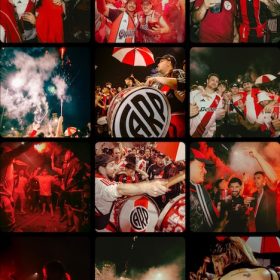
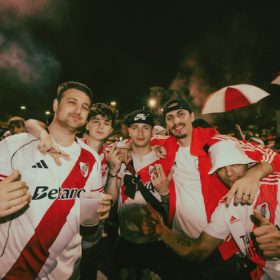
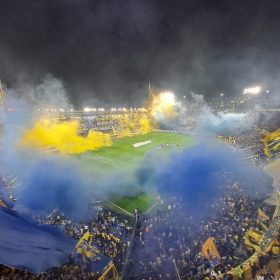
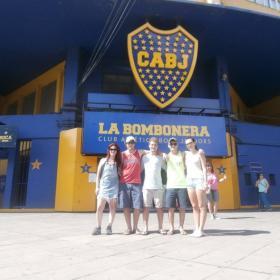
Getting football tickets in Argentina works differently from at home. But it is something you have to do when you go to Buenos Aires. The Power of Sports can arrange for you to see legendary clubs such as Boca Juniors, River Plate, Racing Club, Independiente, San Lorenzo, Huracán and the Argentina national team. What’s more, The Power of Sports does this on a non-profit basis.
Prices & availability
Prices are indicative and can fluctuate strongly due to inflation, the popularity of the match, the opponent and the season.
Competitions
Tickets available for:
-
Argentinian league & cup
-
Copa Sudamericana
-
Copa Libertadores
Prices regular league
-
Ticket: €80 – €160
How to request a ticket
Look up which match you’d like to go to during your stay in Argentina and let us know by adding it to your ‘personal details’. That gives us enough time to arrange a ticket. The ticket price is not on the invoice; you pay it yourself when you are in Argentina. We then put you in touch with a (reliable) seller.

Spanish lessons with Cecilia Wolman
This is Cecilia Wolman (Ceci), a Spanish teacher at the University of Buenos Aires and the partner of Alejandro, the coordinator of your project. She teaches the online Spanish lessons. The lessons are highly recommended because the level of English among our target group is often limited.
The online course runs twice a year, with lessons every Monday at 20:00 (Dutch time).
First course:
24 August | 31 August | 7 September | 14 September | 21 September | 28 September | 5 October | 12 October | 19 October | 26 October.
Second course:
23 November | 30 November | 7 December | 14 December | 21 December | 28 December | 4 January | 11 January | 18 January | 25 January
The lessons are designed specifically for complete beginners. Do you already know some Spanish? Then you can take lessons at your own level in Buenos Aires.
The course costs €100

Overview
| Standard Accommodation | Comfort Accommodation | |
| All meals | No, breakfast only | n/a |
| Free drinks | Water only | n/a |
| People per room | 2 to 4 | n/a |
| Wifi | Yes | n/a |
| Washing machine | No | n/a |
| Bed linen | Yes | n/a |
| Door lock | Yes | n/a |
| Shower | Yes | n/a |
| Private room | No | n/a |
| Cleaner | Yes | n/a |
| Towels | Yes | n/a |
| Mosquito net | No | n/a |
| Fan | No | n/a |
| Air conditioning | Yes | n/a |
Cereal, eggs, toast, juice, fruit, coffee and tea, usually served around 7.30.
If you stay in Argentina for longer than 90 days, you need to leave the country temporarily so that the 90 day period can start again.
The easiest and most common way to do this is to take a short trip to a neighbouring country. Many participants take the ferry to Uruguay, for example to Colonia or Montevideo. The crossing is quick and easy to arrange and is often done in a single day.
An alternative is to fly to another neighbouring country, such as Chile, Brazil or Paraguay. This is sometimes more convenient if you want to combine the trip with a short holiday or excursion.
When you re-enter Argentina, you will usually receive a new 90 day tourist visa. Bear in mind that this is always at the discretion of the immigration service and that rules can change. It is therefore wise to check the current conditions before your trip or around day 75 of your stay.
Please note: this process is popularly known as a ‘visa run’, but it is not an official extension procedure. Technically you remain on a tourist visa, which restarts each time you enter the country.
In this email you only need to follow a few steps to complete the application process.
This allows us to make sure all our team members meet the required standards and contribute to a safe and positive experience for the young people we work with.
Voluntourism
The topic of ‘voluntourism’ gives plenty to talk about, and we completely understand that! You may have heard of ‘orphanage tourism’, but voluntourism is much broader than that. It is really important that you, as a volunteer or intern, are aware of this topic and the influence it can have. At our organisation we set up our projects ourselves and think carefully about every aspect of voluntourism. To set ourselves apart from other organisations, we are even a co founder of ‘Volunteer Aware’, a quality mark that shows we avoid harmful forms of voluntourism.
But it is essential that we consider our behaviour carefully not only as an organisation, but also as individuals. A well known phenomenon within voluntourism is the so called ‘white saviour syndrome’, where Western volunteers and interns tend to see themselves as the saviours of less privileged communities in other countries. Although our programmes definitely have a positive impact, we must stay aware of the limits of our role. As a volunteer or intern you have a supporting role within the project. Remember that we are guests in the community where we work and that our role should mainly focus on supporting local initiatives and listening to the needs of the community.
To help you better understand voluntourism, we recommend watching the video below. It will help you become aware of the key principles of responsible voluntourism and how to apply them in practice during your project.
We are incredibly grateful for your commitment and dedication in taking part in our programmes. Let’s work together towards a responsible and respectful approach to volunteering or interning abroad.
Insurance
Taking part in activities of The Power of Sports is at your own responsibility. Before and during the activity, everyone must have valid health and travel insurance covering medical costs, repatriation, accidents and liability. For activities abroad, an EHIC or GHIC is also required where applicable. Insurance details must be provided on registration; without them, participation may be refused or ended without a right to a refund, insofar as permitted by law.
The Power of Sports and its partners are insured for their business operations, but medical costs and loss of or damage to personal belongings are always at your own expense, unless directly caused by a mistake by The Power of Sports or its partners. For full details see our terms and conditions.
To make sure you are properly insured, we recommend European Insurances. They know our programmes and can give you professional advice, including for trips outside Europe. Through their website you can easily request a call back and get tailored advice within 24 hours. Please check that the policy is available to UK residents; if not, choose a UK travel insurer that covers volunteering and sports activities abroad.
European InsurancesIf you are travelling to Argentina, some vaccinations are recommended to protect your health:
-
DTP vaccination (diphtheria, tetanus and polio): recommended for all travellers to Argentina, regardless of the length of stay.
-
Hepatitis A vaccination: also recommended for all travellers, regardless of the length of stay.
-
Yellow fever vaccination: recommended for travellers visiting the northern and north eastern forest areas, including the area around the Iguazú Falls.
-
Rabies vaccination: for stays longer than three months, or for specific activities that may bring you into contact with animals, a rabies vaccination is recommended.
It is also important to protect yourself against mosquito bites, as diseases such as dengue, chikungunya and Zika occur in Argentina.
Use insect repellent with DEET, wear covering clothing and sleep under a mosquito net where possible.
Given the variable health risks and personal circumstances, it is advisable to contact a travel clinic or your GP well before departure for personal, tailored advice.
Click the link for our current Terms and conditions and code of conduct
The Power of Sports – Code of conduct
As a volunteer or intern with The Power of Sports, you help create a safe, respectful and positive environment for everyone involved in the project. This short code of conduct describes what is expected of you.
1. Respect and behaviour
- Treat all participants, colleagues, volunteers and interns with dignity and respect.
- Discrimination, intimidation, bullying, abuse or any form of inappropriate or transgressive behaviour will not be tolerated.
- Always contribute to a safe, inclusive and supportive environment, and outside project activities too, show respect for local culture, norms and customs by avoiding behaviour or expressions that could be experienced as offensive, disrespectful or inappropriate in the local context.
2. Professionalism and integrity
- Act honestly, responsibly and professionally.
- Do not misuse your position, information or project resources for personal gain.
- Follow the instructions and guidelines of project coordinators where necessary, when they relate to safety, cooperation or the reputation of the project.
- Offering or accepting inappropriate gifts or other unlawful benefits is prohibited.
3. Laws, rules and safeguarding
- Comply with all applicable local laws and project rules.
- Respect all safety, health and safeguarding regulations, including child protection policies where applicable.
- Respect the house rules of accommodation and partner organisations, follow coordinators’ instructions regarding safety, wellbeing and regulations, and be aware of your role as a representative of the project during your stay and activities.
4. Use of property and resources
- Handle project and partner property, facilities and materials with care.
- Use these resources only for legitimate project related purposes.
5. Communication and cooperation
- Work constructively and respectfully with fellow volunteers, interns, staff and partners.
- Communicate openly, honestly and professionally in all project related situations, both during and outside working hours when it concerns the project.
- Respect agreed schedules, working arrangements and responsibilities.
- Report concerns, incidents or suspected misconduct to your supervisor or project coordinator as soon as possible.
- Inform your supervisor in good time in case of illness, delay or absence, and always agree changes in planning or attendance in advance with the coordinator responsible.
- Take responsibility for your own wellbeing and consider the safety and wellbeing of others in the project environment.
6. Drugs / alcohol
- The possession, use, purchase or distribution of illegal drugs or narcotics is strictly prohibited for the entire period you stay with us.
- Breaking this rule leads to immediate termination of participation and may lead to removal from the project and/or accommodation.
- You are responsible for complying with local laws on drugs and alcohol, which in some countries may be stricter than in your own country.
7. Sexual contact and transgressive behaviour
- Sexual harassment and transgressive behaviour are not permitted.
- Sexual contact with minors is strictly prohibited and leads to immediate termination of participation and possible reporting to the authorities.
- Sexual contact between volunteers, interns, staff or others involved is discouraged in order to maintain professional boundaries.
8. Conflicts of interest
- Avoid situations in which personal interests could conflict with your role as a volunteer or intern.
- Report any actual or potential conflicts of interest to the project coordinator immediately.
9. Compliance
- Compliance with this code of conduct is a condition of participation as a volunteer or intern.
- In serious cases, non compliance may lead to immediate termination of participation without a right to a refund.
10. Use of photos and video
- Photos and videos taken during project activities are the property of The Power of Sports.
- Volunteers and interns may only use this footage for project related purposes and with the prior permission of the organisation.
- Sharing photos or videos on social media or other external platforms is only allowed with permission, always respecting the privacy and safety of participants and third parties.
What to bring
The following list helps you choose and prepare your clothing and equipment for your trip to Argentina. The weather will generally be warm, but in winter the nights can feel cold. It’s an informal setting, so leave formal clothes such as a three piece suit or ball gown at home.
On arrival you receive a (sports) shirt from our foundation to wear while coaching. As you won’t want to wear the same shirt every day, it’s wise to bring extra sportswear.
Recommended clothing
- Fleece: for cold nights, especially in the winter months.
- Hat: to protect your head from the sun and prevent sunstroke. A wide brimmed hat gives better protection than a cap.
- Jumper: bring a couple of warm jumpers (wool/fleece) for colder evenings.
- Sports shirts: you get one from us, but it’s handy to bring quite a few more sports shirts.
- Shorts: bring enough shorts; it will usually be warm.
- Socks: bring plenty of socks, as you will be doing lots of sport. Also think of football socks if you are going to play football with a local team.
- Swimwear: for pools and the sea, and maybe for surfing.
- Trousers: cotton trousers are ideal for warm days and for keeping insects off at night.
- T-shirts: bring plenty of T-shirts for everyday use.
- Underwear: cotton underwear is more hygienic. Make sure you have enough for a week.
- Special equipment: whistle, hockey stick (for hockey coaches), trainers and football boots.
Shoes
- Casual shoes: one pair is enough.
- Sandals/flip flops: comfortable sandals or flip flops with ankle straps are handy in warm climates.
- Trainers: choose a pair of shoes that can get dirty, as you will be working and playing sport outside a lot, possibly in muddy conditions.
Rainwear
- Waterproof jacket: lightweight, waterproof and breathable, ideal for unexpected showers.
Other essentials
- Camera/phone: to capture great moments.
- Personal first aid kit: a good first aid kit is essential when travelling.
- Mosquito and insect repellent: use a strong product with at least 50% DEET.
- Sleeping bag: optional, for further travel after your stay.
- Sun cream and after sun: a high factor (30+) is essential to protect you from the sun.
- Sunglasses: protect your eyes from the bright sun.
- Torch: handy, especially during power cuts. The torch on your phone can also do the job.
- Towels: bring at least two towels and a beach towel.
- Wash bag: with the usual toiletries.
- Water bottles: make sure you always have two litres of water with you; bottled water is usually available.
- Handy bag: bring a small bag for everyday use.
The Power of Sports clothing
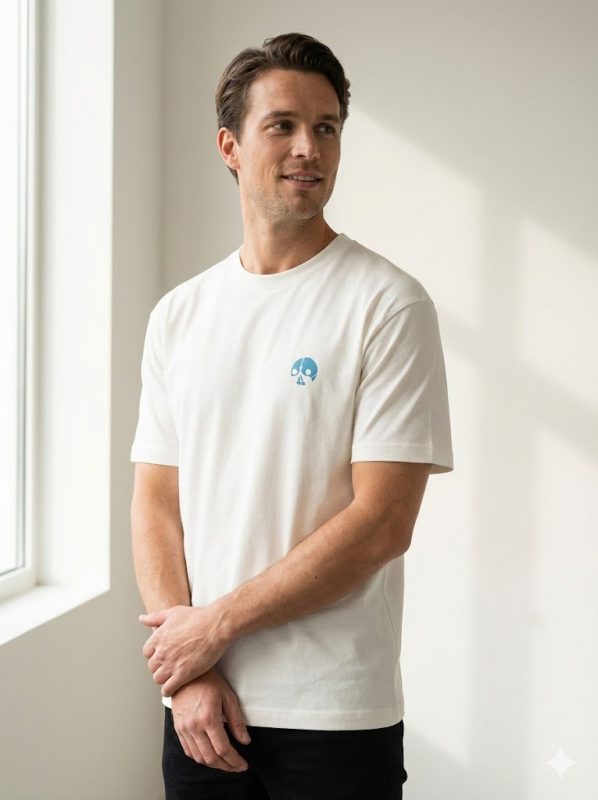
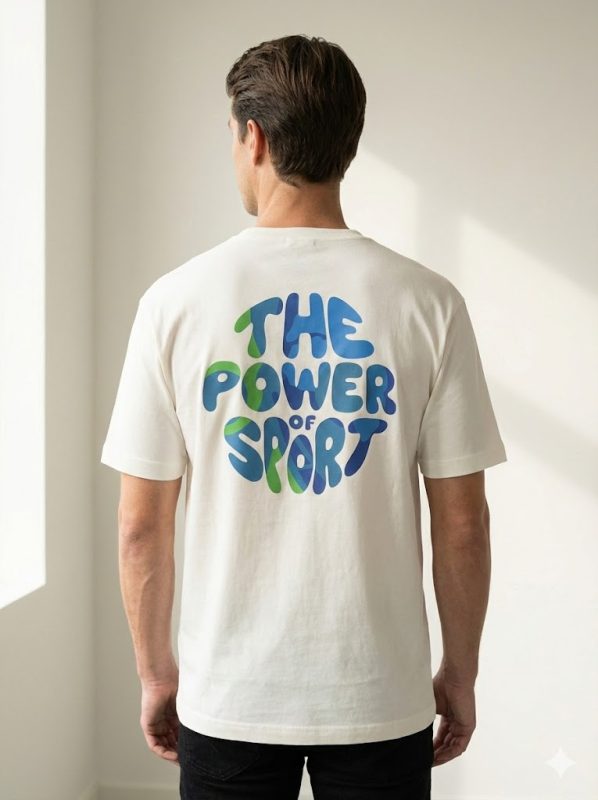
By taking part you receive this great The Power of Sports shirt from us. After you have filled in your personal details, we send you an email with your unique code. With that code you can order the ‘casual shirt’ for free.
To do this, go to our web shop, click on the casual shirt and enter your unique code. The shirt will be sent to you before you leave.
It’s also ideal to wear the shirt on your arrival day, so our colleagues abroad can easily spot you when you are picked up from the airport
Would you like to order extra shirts or other clothing? Of course you can! Feel free to have a look at the rest of our range. All clothing is high quality and delivered to your home before departure.
Worth knowing:
The full profit from the shirt goes straight to The Power of Sports Foundation. So you not only wear a great shirt, you also do your bit for our foundation!
Not all SIM cards work in Buenos Aires. If yours doesn’t, you can get an Argentinian SIM card, which also means you get a new Argentinian phone number. You can buy the SIM card at one of the many kiosks near the accommodation. Most people buy it from a company called ‘Claro’. You need your passport for this! In the shop they explain how everything works.
Buenos Aires has a very good public transport system. There are buses,
trains and even underground lines that can take you anywhere in the city. You will use public transport a lot, as you also use it to get to the different projects. To use the bus, underground or train you need a SUBE card, which you receive from us when you arrive at the accommodation. During your time in Buenos Aires you will need to top it up now and then; it only costs a few euros each time.
The Argentine peso fluctuates enormously, so for the latest exchange rate use www.xe.com
We recommend exchanging your money through Western Union. It gives you a much better rate than a local bank. You can find Western Union at many locations in Buenos Aires, but there are often long queues, so it’s best to withdraw money in the morning.
Typical working day
(Times may vary per day depending on the schedule and location.)
- 8:00 – Breakfast
- 08:30 – Leave for the project location
- 09:00 – Arrive at the project location and start activities
- 12:30 – End of project/work activities
- 13:00 – Return to the accommodation
- 14:30–16:30 – After school programme, planning and evaluation of the daily project activities, including monitoring and preparing drills for upcoming sessions (twice a week)
- 16:00–19:00 – Coaching/training at the club, on days without a planning and evaluation session (twice a week)
* Some days there may be extra sports activities or local events on the programme. You may also have some weekday afternoons off. We work on the basis of around 35 hours a week, including travel to the programmes.
At the weekends you are always free. As an intern or volunteer you can do whatever you like, but it’s good to know there are always organised programmes for you.
In Buenos Aires:
1. Discover the nightlife
Buenos Aires is known for its nightlife, which only really gets going after midnight. Popular nightlife districts are Palermo and San Telmo, with lots of bars, clubs and rooftops. For dance lovers there is La Bomba de Tiempo, a percussion group that puts on a show every Monday, and Niceto Club, with a mix of music styles and theme nights.
2. Experience tango
Learn to dance the tango in an authentic setting! Go to a milonga (tango dance night) in San Telmo or La Boca. For beginners there are often free or cheap dance lessons at well known places such as La Viruta or Milonga Parakultural.
3. Street art tour in Palermo
Buenos Aires has one of the most impressive street art scenes in the world, especially in Palermo. There are walking and cycling tours that let you explore the colourful and politically charged murals of local artists.
4. Visit a professional football club
Buenos Aires is the place for football lovers! See Boca Juniors play at the iconic La Bombonera stadium or River Plate at El Monumental. The intense atmosphere, passionate fans and singing supporters make it an unforgettable experience. Do make sure you get tickets in advance, as matches often sell out!
5. Soak up the culture in La Boca and Caminito
La Boca is a must see, with its colourful houses and the famous pedestrian street Caminito. Next to the Boca Juniors stadium, you can experience art, music and a passion for football on every street corner.
6. Visit San Telmo
San Telmo is a charming, historic district with vintage shops, street musicians and cosy cafés. On Sundays the San Telmo market is a highlight, with stalls full of antiques, handmade jewellery and local treats.
7. Free events and festivals
Buenos Aires regularly hosts free events and festivals, especially in spring and summer. Festivals such as the Buenos Aires Jazz Festival and open air concerts in Parque Centenario attract lots of young people.
8. Hang out in the parks of Palermo
The vast Parque Tres de Febrero is a lovely place to relax, picnic or cycle. It is also home to the Rosedal (rose garden), a beautiful place to unwind or row on the lake.
9. Visit markets
Besides San Telmo, the Feria de Mataderos is well worth a visit. This market, just outside the centre, offers an authentic Argentinian atmosphere with traditional dance, gauchos (Argentinian cowboys) and all kinds of typical Argentinian treats.
10. Visit Recoleta Cemetery
It may not sound like a typical activity for young people, but Recoleta Cemetery is truly unique. Famous Argentinians such as Eva Perón are buried here. The impressive graves and mausoleums make it almost an art gallery.
11. Explore the coffee and brunch culture
Buenos Aires has a trendy coffee and brunch culture, especially in Palermo and Recoleta. Café Lab and Lattente are popular spots, and there are lots of options for a relaxed morning with good coffee and local dishes.
12. See Buenos Aires from above
Take a ride on the big wheel in Puerto Madero or visit Plaza San Martín for a great view of the city. The modern Puerto Madero district also has a promenade with restaurants and terraces.
13. Shopping in the city centre
For a day of shopping, head to Florida Street and the modern Galerías Pacífico shopping centre. Besides shops you’ll find street artists and pleasant squares to grab a bite in between.
If you have more time, the following are also recommended:
2. Mendoza
3. El Calafate
4. Bariloche
5. Salta
6. Córdoba
7. Ushuaia
8. Colonia (Uruguay)
9. Montevideo (Uruguay)
10. Santiago (Chile)
Confidential adviser
If something happens during your stay abroad that you would like to talk about with someone outside our organisation, you can contact one of our two confidential advisers. They are trained for this and offer an independent and confidential listening ear. Together you can discuss what happened and what support you might need.
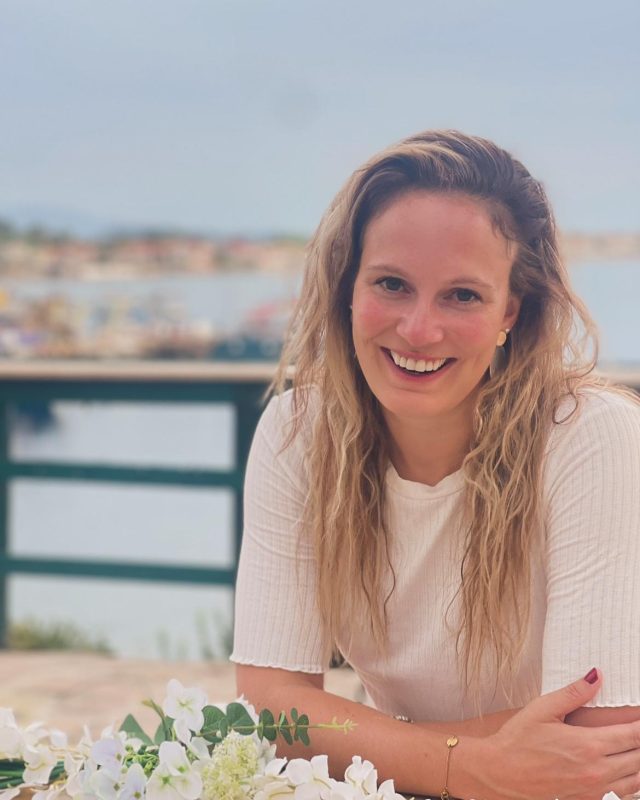
Catherine (confidential adviser)
Tel: +31 6 27117466
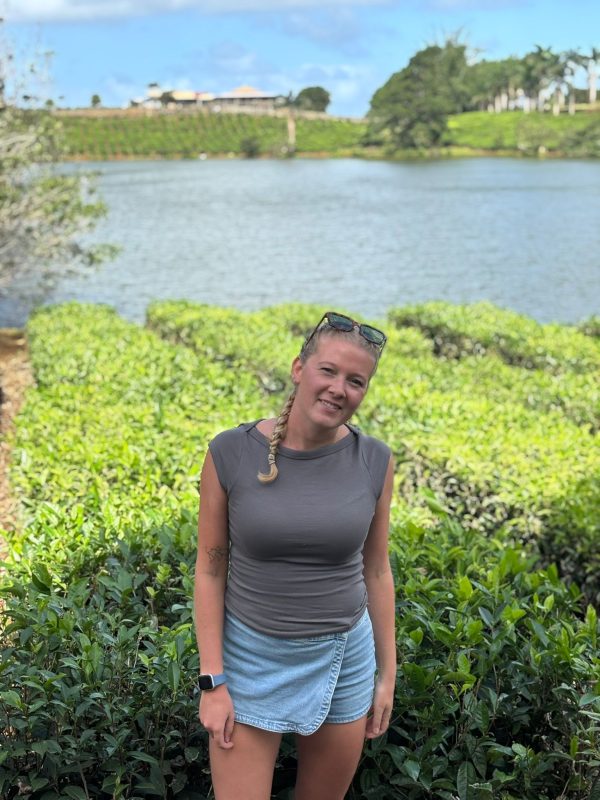
Juliette (confidential adviser)
Tel: +31 6 37350327
Hi, I’m Juliette. I’m originally from Leiden and completed my bachelor’s in Psychology and master’s in Forensic Psychology in England. I now live in Holland again, although I’m often abroad.
My passion lies in contact with people: I love to listen and talk, and I think it’s important that everyone feels heard, understood and at ease. I believe an open and safe atmosphere is the basis for personal growth and development. That’s why I try to meet the person in front of me without judgement and explore together what they need to move forward.
Besides my interest in psychology, I get a lot of energy from travelling, discovering new cultures and meeting different people. These experiences have broadened my view and help me look at others with an open, curious and empathetic attitude. The combination of travel and psychology is why I’m keen to be a confidential adviser for The Power of Sports.